

Underwater Thailand is a world of coral gardens, darting reef fish and sunlight falling through blue water. From Phuket, you can explore it on a first scuba experience, a day trip for certified divers or a longer journey into the Andaman Sea.
The most memorable dives often begin with something small: an anemonefish peering from its shelter, a shoal changing direction together or a turtle passing quietly over the reef. This guide introduces the marine life and underwater landscapes to look for, with links to help you choose your next trip.
What can you see underwater in Thailand?
A reef rewards a slow approach. Look across it for schools of fish, then pause beside the smaller features your guide points out. Keep clear of coral and leave animals room to carry on with their day.
Reef fish and tiny details
Anemonefish, butterflyfish, parrotfish and moray eels bring different shapes and behaviour to a dive. Small creatures can be easy to overlook, so ask your guide what to watch for and enjoy discovering more than the obvious highlights.
Schools in the blue
A moving shoal can transform the scene above a reef. Watch the edges as well as the centre: changing light and coordinated movement are part of the spectacle. Stay with your buddy instead of following fish into deeper water.

Turtles and larger visitors
A turtle encounter is a wonderful addition to a reef dive. Keep your distance, avoid surrounding it and let it choose its own direction.
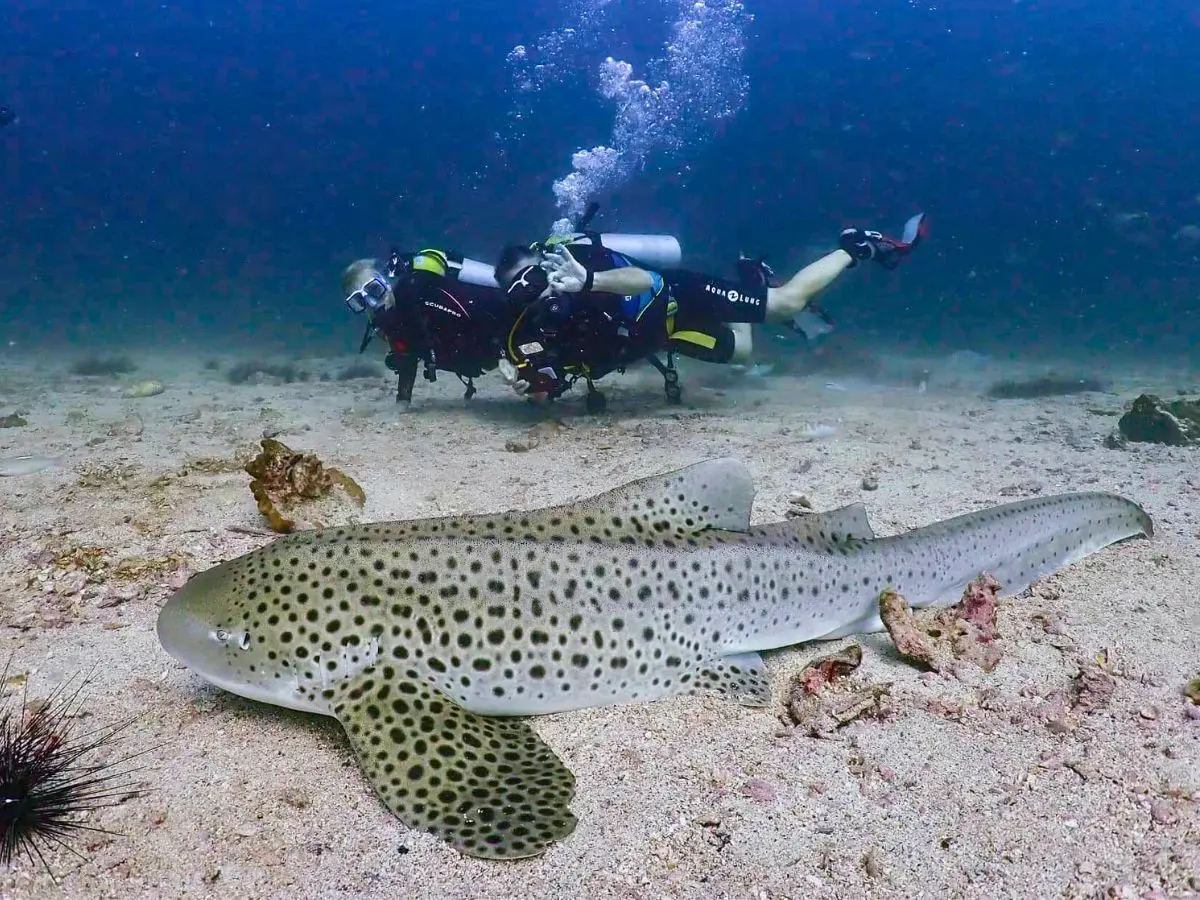
Reef sharks, leopard sharks and whale sharks are other possible highlights at suitable sites. Sightings vary; choose a trip for the whole underwater experience. Our sharks of Thailand guide helps you recognise the different species.
Explore different underwater landscapes
Phuket is a useful starting point for several distinct diving areas. Reef shape, depth, shelter and water movement vary between sites, so the best choice depends on your experience as well as what you hope to see.
Racha Yai and Racha Noi
The Racha Islands offer reef slopes, sandy areas and varied dive sites. They are a good starting point when comparing a day of tropical reef diving from Phuket. Read the Racha Islands dive-site guide for the underwater setting, then see the Racha Islands day trip for the current trip details.
Phi Phi and Shark Point
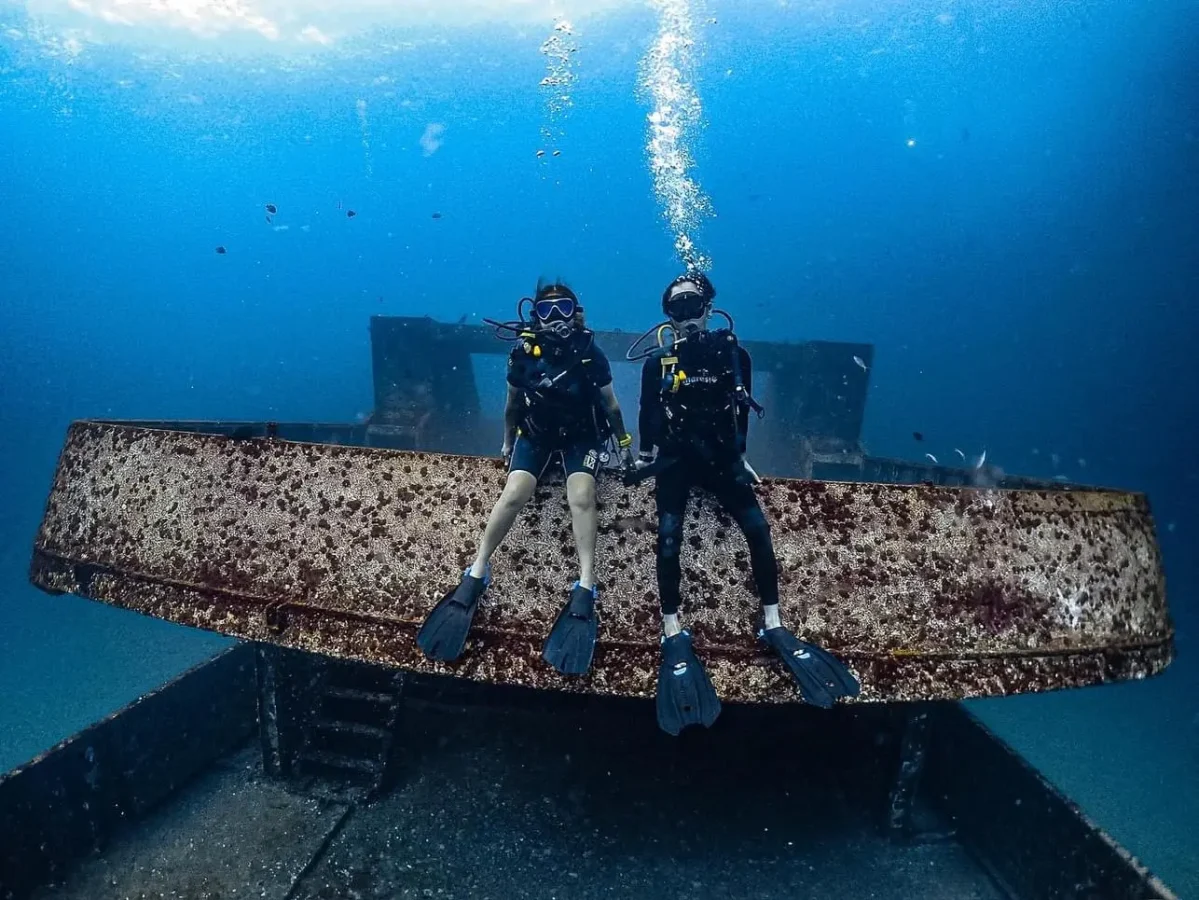
Phi Phi combines limestone island scenery with reef diving. Shark Point offers another reef environment, with soft corals and marine life to watch for. Compare the Phi Phi diving trip with the King Cruiser and Shark Point itinerary; the latter combines reef and wreck sites and is for Advanced certified divers.
The Similan Islands and northern Andaman Sea
Seasonal northern trips open up offshore reefs and more time on the water. Check the exact itinerary when comparing Similan liveaboard options: not every trip visits the same sites. Richelieu Rock belongs to the Surin-area route, so it should not be assumed to be included in a Similan itinerary.
If seeing a whale shark is on your wish list, the whale shark diving guide explains the routes to consider. An encounter is a possible highlight, rather than something a calendar date can promise.

Look closer, dive gently
The reef is living habitat. Keep fins, hands and equipment clear, and leave shells and marine life where you find them. A quieter approach also gives you more time to notice behaviour.
Our responsible diving and reef-care guide turns that approach into simple habits for your next dive.
Choose an underwater experience that fits you
New to scuba? Start with an instructor-led Discover Scuba Diving experience. If you want to work towards certification, explore the PADI Open Water course. Families can also read our guide to scuba diving with children.
Already certified? Compare Phuket diving day trips and tell the team your qualification, last dive and travel dates. This helps match the sites to your experience. For a surface-based experience, explore the snorkelling guide instead.
Weather, visibility and current change, even at familiar sites. Northern marine-park access is seasonal; local trip choices also depend on the day’s conditions. Ask about the current route rather than planning around a fixed visibility figure or an old wildlife report.
Photograph the experience without disturbing it

A camera is most useful when you can stay comfortable and balanced in the water. Before bringing one, read the underwater camera guidance for beginner divers and confirm the rules for your trip. Photography permission and suitability depend on the site and your experience.
When photography is permitted, frame the scene from a respectful distance, keep your buddy in view and leave coral clear of your body and equipment. If you cannot hold position comfortably, enjoy watching and leave the photograph for another moment.
Questions about underwater Thailand
Do I need a diving qualification to see the reefs?
You can join a suitable instructor-led introductory scuba experience without already being certified, or choose a snorkelling trip. Certified-diver trips have their own requirements; check the experience you are booking.
Will I see a turtle or a shark?
Encounters are possible at suitable sites, but animals move freely and sightings cannot be guaranteed. Reefs, smaller fish and the underwater scenery make the dive worthwhile too.
Can I dive from Phuket throughout the year?
Local diving operates throughout the year when conditions allow, with routes adjusted to the weather. Northern marine-park trips are seasonal. Check the current itinerary and operating dates before booking.
Which trip should I choose first?
Start with your experience level, travel dates and the kind of day you want. Tell the team whether you are new to scuba or already certified, and when you last dived. They can help compare suitable routes.
 4.8/5
4.8/5 Read on Google