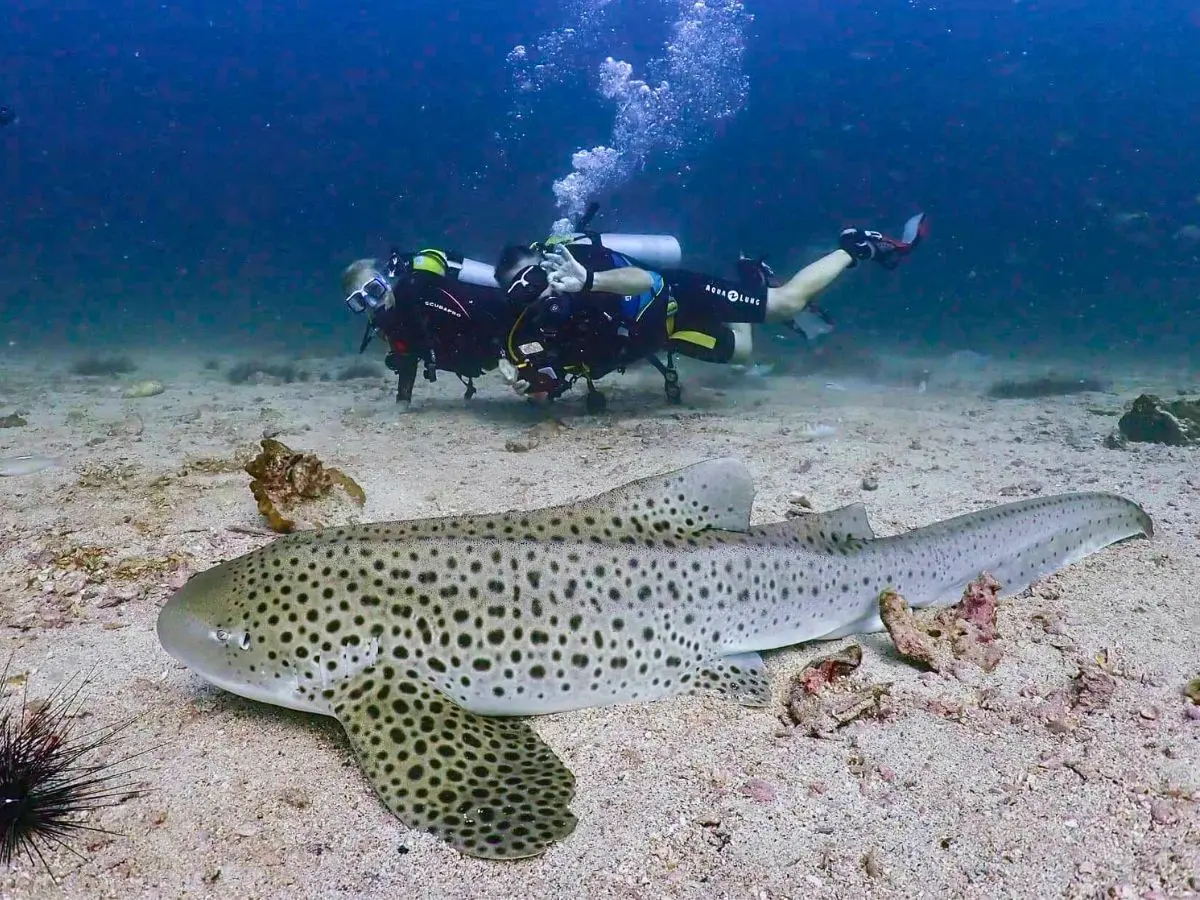
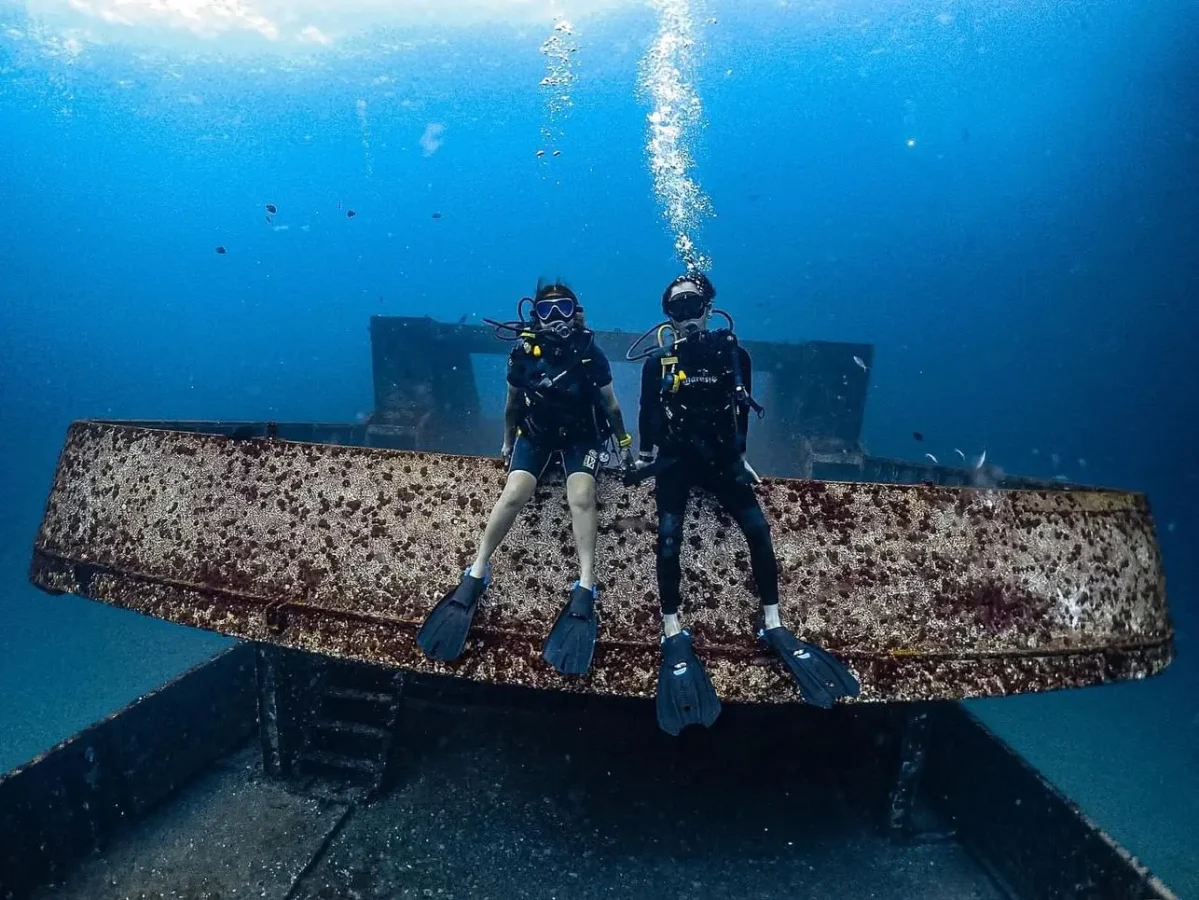
Scuba diving in Phuket for beginners can start with a supervised first experience or with a full certification course. The right option depends on your time, water confidence, medical answers and what you want to do after the holiday.
You do not need to buy equipment or know how to use scuba gear before training. You do need to answer the medical questionnaire honestly, listen carefully and be willing to stop if you are uncomfortable. A first dive should feel calm and controlled—not like a test or an underwater race.
Choose the right beginner option
Discover Scuba Diving — one day
Try three guided reef dives around the Racha Islands for ฿6,000 per person, with a private PADI instructor for your booking. This is an introductory experience, not a certification. You must be at least 10, able to swim and comfortable in the water.
Earn your entry-level diving certification through eLearning, pool practice and six Racha Islands sea dives: four training dives and two fun dives. The course costs ฿16,000 per person and includes private instruction. You need to complete the swimming and float assessment; younger students earn the age-appropriate Junior certification.
Prefer to start in a pool? Explore Scuba — two days
Start with a small-class pool session before three supervised reef dives, for ฿12,000 per person. It is an introduction, not a certification. If you cannot swim or feel uneasy in water, tell us before booking so your instructor can assess the right next step.
If you only want to experience breathing underwater, compare the current Discover Scuba Diving option. If you want a certification for future holidays, review the PADI Open Water course in Phuket.
Do beginners need to know how to swim?
For our one-day Discover Scuba Diving trip, you must be able to swim and feel comfortable in the water. If you need a pool-first introduction, discuss Explore Scuba with us before booking.
For the PADI Open Water course, candidates must complete a continuous 200-metre swim without swim aids or a 300-metre swim using mask, fins and snorkel, plus a 10-minute float or tread. The swim has no time limit. Read our swimming and scuba guide if you are unsure about the requirements.
Medical screening before scuba diving
Complete the current diver medical questionnaire before the activity and follow its directions, including any page-two follow-up questions. If it directs you to medical evaluation, obtain approval before diving. Do not hide asthma, heart or lung conditions, ear problems, medication, pregnancy, recent illness or another relevant issue. Our medical-form guide explains the paperwork.
If you feel unwell, congested or unable to equalise your ears, tell the instructor. It is better to change a plan than to push through pain or conceal symptoms.
What happens on a first diving day?
- Paperwork and medical check: the team confirms your forms and discusses any concerns.
- Equipment fitting: you are fitted with exposure protection, buoyancy equipment, regulator, mask and fins appropriate to the operation.
- Briefing: the instructor explains breathing, equalising, hand signals, buoyancy, clearing a mask and what to do if you feel uncomfortable.
- Practice: beginners rehearse essential skills under close supervision before progressing.
- The dive: the route, depth and duration stay within the programme, conditions and the instructor’s judgement.
- Debrief: you discuss the dive and the best next step without pressure to continue.
The exact schedule, transport and site depend on the programme and current operation. Confirm the details for your booking instead of relying on an old article or a generic package description.
Which Phuket dive area suits a beginner?
Racha Yai is commonly used for beginner programmes because some sites can offer suitable training environments. That does not make every Racha Yai site calm every day. Weather, wind, currents, boat traffic and visibility change, and the instructor or captain selects the appropriate plan.
More exposed or demanding sites may require certification and recent experience. If you are already certified but have not dived for a while, a refresher or conservative first dive may be better than immediately choosing the deepest or most famous trip.
Common beginner worries
Is scuba-diving insurance included?
Yes. Scuba-diving accident cover is included for Discover Scuba Diving, Explore Scuba and Open Water students during their booked course, subject to eligibility and policy terms. These students do not need to arrange separate scuba cover for those course activities. This does not replace travel insurance or cover later certified fun dives.
Read the documents supplied for your booking for the insured activities, limits and exclusions. Keep your cover details available during your course, and contact us if you need help finding them.
Certified divers joining day trips, liveaboards or further training must arrange their own suitable cover. See our scuba insurance guide for the full distinction and the optional DAN route.
“What if I feel nervous?”
Nerves are normal. Tell the instructor before entering the water. Slow practice, clear signals and permission to stop are more useful than pretending to be confident.
“Can I breathe through my nose?”
A scuba regulator goes in your mouth, so you breathe through your mouth while the mask covers your nose. The briefing and practice help this feel natural.
“Will I see turtles, sharks or a whale shark?”
You may see tropical marine life, but no animal or visibility level can be guaranteed. The goal of a first dive is a safe, comfortable experience; wildlife is a bonus.
“What if I cannot equalise my ears?”
Signal immediately, stop descending and follow the instructor. Never force equalisation or continue through pain.
Before booking your first Phuket dive
- Share your age, health information and swimming comfort honestly.
- Ask whether the option is an experience or a certification course.
- Confirm the current meeting point, pickup, schedule and inclusions.
- Allow a conservative interval before flying after diving.
- Avoid heavy alcohol and arrive rested and hydrated.
- Do not book solely for a guaranteed animal or a fixed visibility claim.
For practical day-of-trip preparation, read 10 things to know before your first scuba diving day in Phuket.
Ask which beginner route fits you
Tell Thailand Divers your preferred dates, number of people, ages and swimming confidence, and whether you want to try scuba or qualify. We can explain the current options and help you choose without pressure. Check the medical questionnaire early; personal documents follow after the course and dates are agreed.
Ask Thailand Divers about beginner scuba diving.
Official references: PADI Discover Scuba Diving FAQs, PADI Discover Scuba versus Open Water, PADI certification FAQs and the PADI diver medical questionnaire.
 4.8/5
 Read on Google