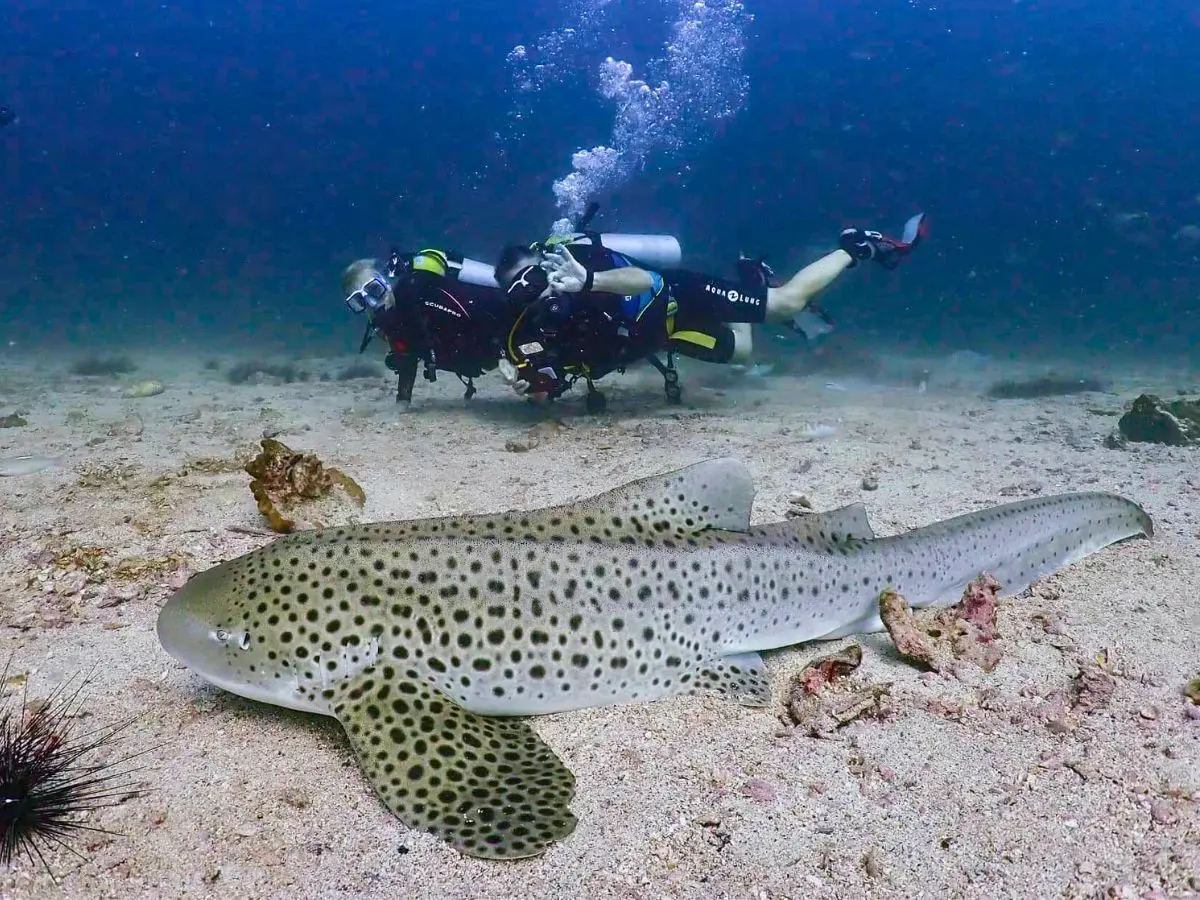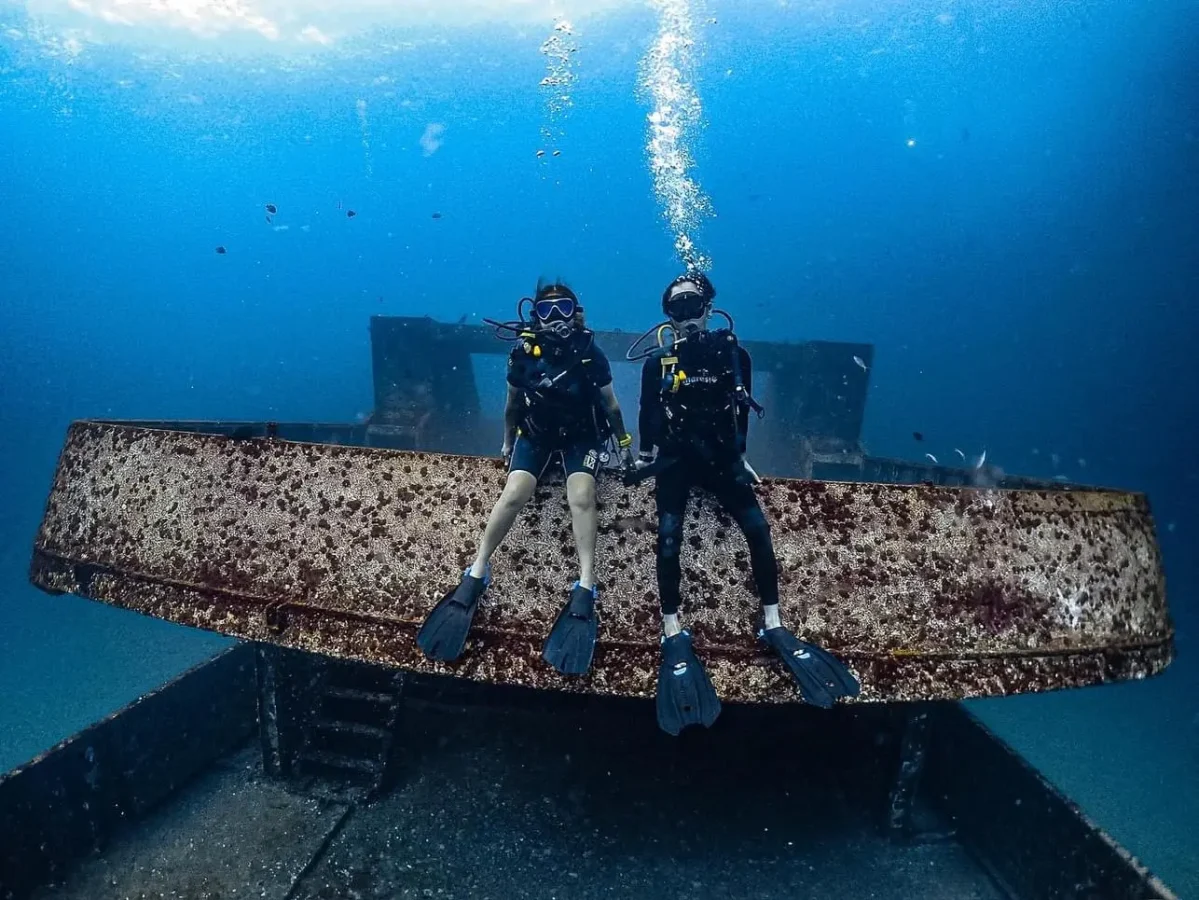

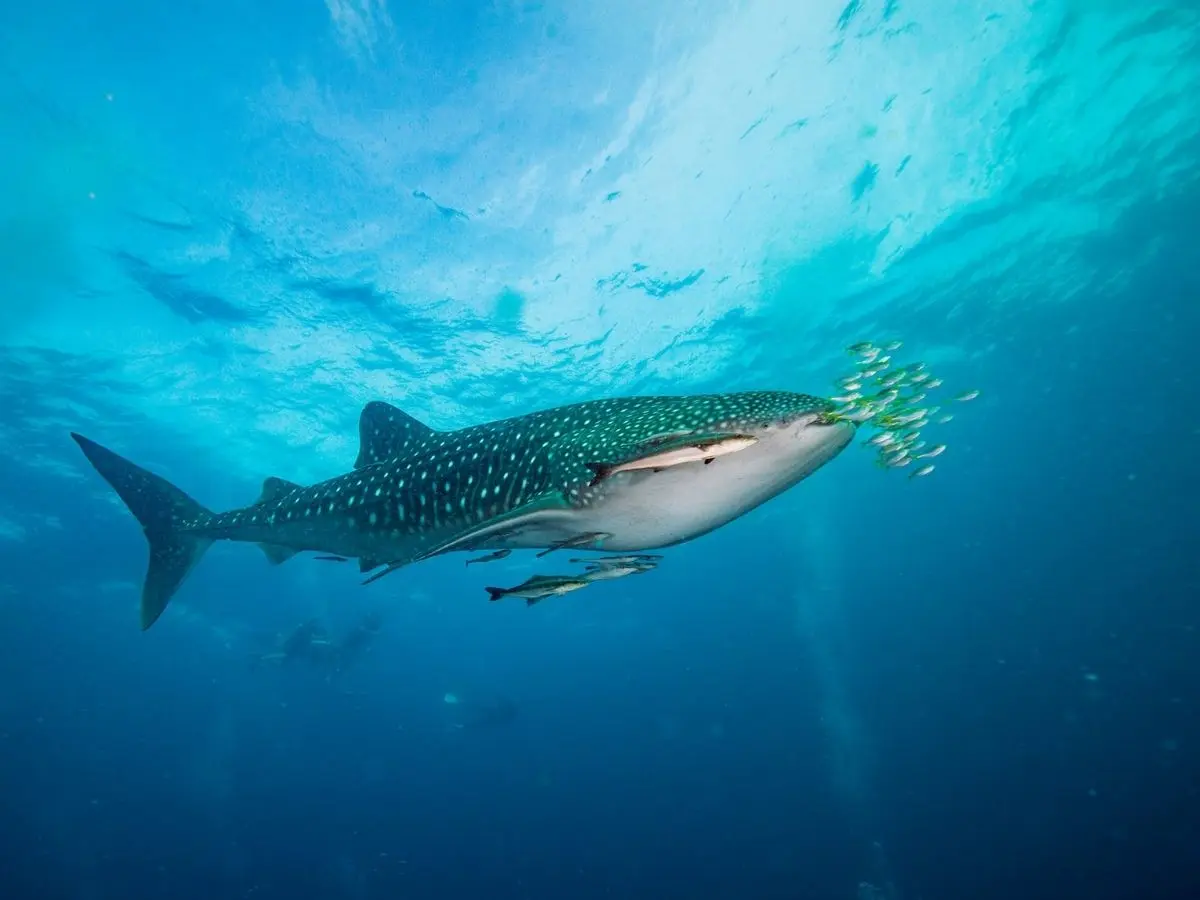
A spotted silhouette appears in the blue, and suddenly the reef seems very small. Whale shark diving in Thailand can be an extraordinary experience—and the best trip is one you would enjoy even before that moment arrives.
This guide explains where whale sharks are encountered, how the Andaman and Gulf routes differ, and how to plan a rewarding diving holiday from Phuket. Sightings are wild encounters, so no trip or month can promise one.
Start with the Andaman Sea. Richelieu Rock belongs to the Surin-area route; some northern liveaboards combine it with other destinations. Koh Tao and Sail Rock are on the Gulf coast and require a separate travel plan.
Meet the world’s largest fish
A whale shark is a shark, not a whale. It breathes through gills and feeds by filtering small organisms from the water. Its broad head, enormous mouth and pale pattern of spots and stripes make it unmistakable.
Those patterns are useful beyond identification in a holiday photograph: researchers can use them to recognise individuals. Whale sharks are highly mobile, so a sighting at one site does not mean the animal will remain there for the next boat.
Where can you see whale sharks in Thailand?
Richelieu Rock
This isolated pinnacle in Mu Ko Surin National Park is one of Thailand’s best-known whale-shark encounter sites. The reef and fish life make it a worthwhile destination in their own right.
Our Richelieu Rock day trip accepts Advanced Open Water divers and above in the standard guided group. Open Water divers can join with a private divemaster guide, subject to availability; one guide can accompany up to two Open Water divers. Share your certification and recent diving experience so we can confirm a suitable dive plan and departure.
Andaman liveaboard routes
A liveaboard lets you spend several days exploring offshore sites. Routes differ: a trip described as “Similan” does not automatically visit Richelieu Rock.
Compare our Similan and northern Andaman liveaboard options, then check the exact itinerary and experience requirements.
Koh Tao and Sail Rock
Chumphon Pinnacle, Southwest Pinnacle and Sail Rock are associated with whale-shark sightings on Thailand’s Gulf side. This is a different region from Phuket and the Andaman Sea.
Allow separate travel time if you want to include both coasts in one holiday.
Local day trips
Choose a local dive day for its usual reefs, wrecks and marine life. An occasional large visitor is a bonus, rather than a reason to treat a day trip as a dedicated whale-shark safari.
Our Phuket diving day trips help you compare the regular experiences.
When is the best time for whale shark diving?
There are two separate questions: when a route operates, and when a whale shark might pass through. The first can be planned; the second remains variable.
For the Andaman Sea, PADI highlights October to May for west-coast diving. Northern marine-park trips also depend on official opening dates and weather. Check the dates for the actual departure rather than assuming that a broad “Thailand diving season” applies everywhere.
The Gulf follows a different pattern. Records around Koh Tao include sightings throughout the year, with seasonal peaks in some datasets. That is useful context, but it does not provide a dependable appointment with an animal.
A better booking question: “Which route suits my dates and experience, and what will the diving be like if no whale shark appears?” For wider holiday planning, use our Phuket weather and seasons guide.

Let the whale shark lead the encounter
The best view comes from a calm, unhurried encounter. Follow the guide’s briefing and local rules, keep a respectful distance and leave the animal a clear route.
Stay aware of your buddy and dive plan. A large animal passing overhead is no reason to lose track of depth, breathing gas or the group.
- Never touch, ride, feed, chase or surround a whale shark.
- Stay clear of its head and powerful tail; do not block its path.
- Move calmly and avoid crowding it for a photo.
- Maintain buoyancy and keep equipment away from the reef.
- If it turns away, let it leave rather than following it beyond your dive plan.
The same habits improve every marine-life encounter. Read our responsible-diving guide for practical reef-care advice.
Which experience level do you need?
Suitability depends on the dive site, not the size of the animal. Offshore pinnacles can involve current, depth and open-water conditions. Share your certification, approximate dive experience and the date of your last dive before choosing a route.
If you are new to scuba, build confidence through a suitable introduction or PADI Open Water course in Phuket. Learning to control buoyancy and stay aware of a buddy makes later wildlife encounters much more enjoyable.
Plan the trip around good diving
- Choose your coast. Use Phuket for Andaman routes; plan separate travel for Gulf destinations.
- Match the route to your experience. Confirm the actual sites and requirements.
- Allow enough holiday time. Consider transfers, several diving days if wanted, and a sensible gap before flying home.
- Keep wildlife expectations flexible. Ask about recent conditions without treating yesterday’s sighting as a guarantee.
Before booking flights around a liveaboard or day trip, read our flying-after-diving planning guide.
Whale shark diving questions
Is Richelieu Rock in the Similan Islands?
No. Richelieu Rock is part of Mu Ko Surin National Park. A longer northern Andaman itinerary may combine several areas, which is why checking the named sites matters.
Can I snorkel on the Richelieu Rock diving trip?
The Thailand Divers Richelieu Rock day trip is for divers and is not offered as a snorkelling trip. If snorkelling is your preference, compare our four snorkelling trips from Phuket.
Are whale sharks dangerous?
They are filter-feeding fish, but their size and movement still demand space. Observe calmly, avoid the tail and follow the guide’s instructions.
What else might I see?
That depends on the site, season and conditions. Thailand’s diving offers reef fish, corals and many smaller animals as well as occasional large visitors. Explore our guide to sharks in Thailand for more marine-life background.
References: Florida Museum species profile, PADI Richelieu Rock guide, PADI seasonal diving guide, IUCN SSC Shark Specialist Group: Koh Tao and NOAA wildlife-viewing guidance. Reviewed September 2026.
 4.8/5
4.8/5 Read on Google