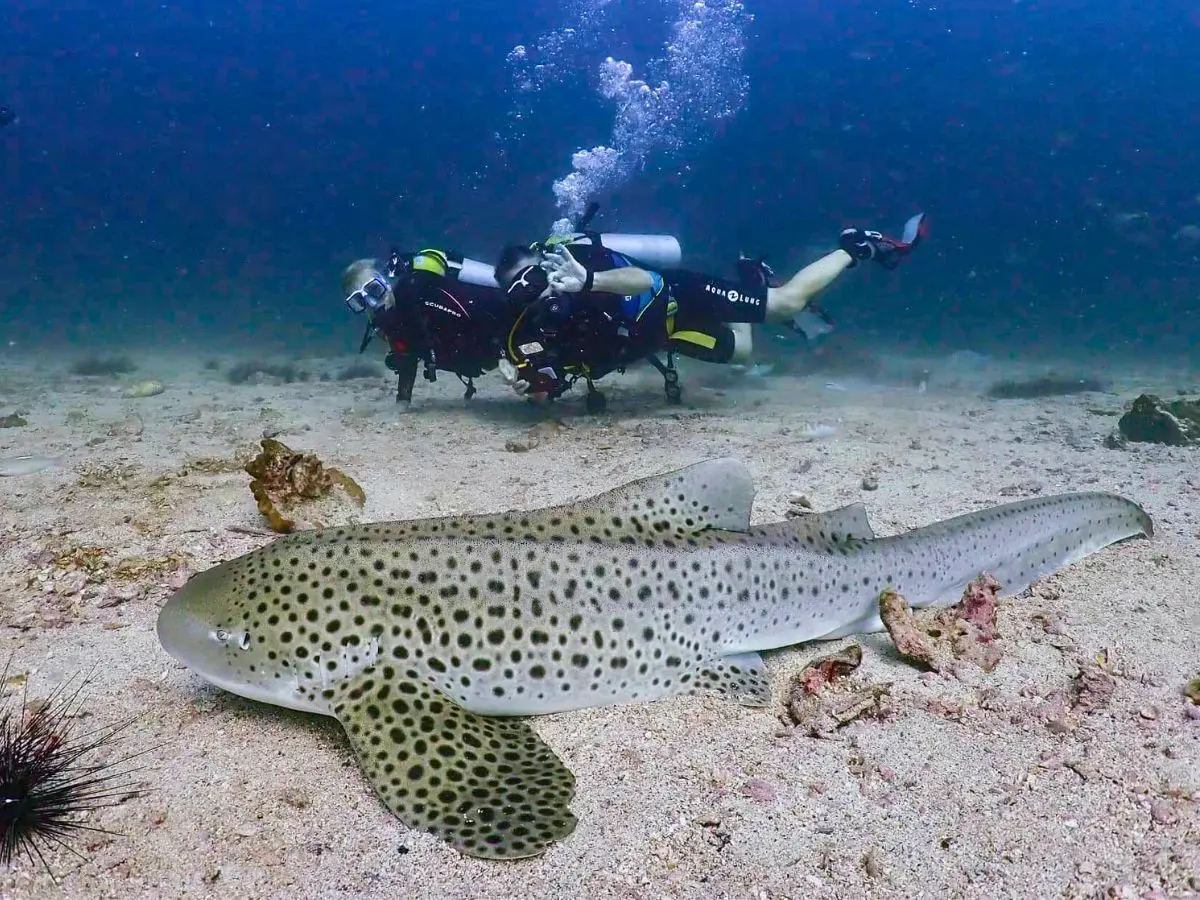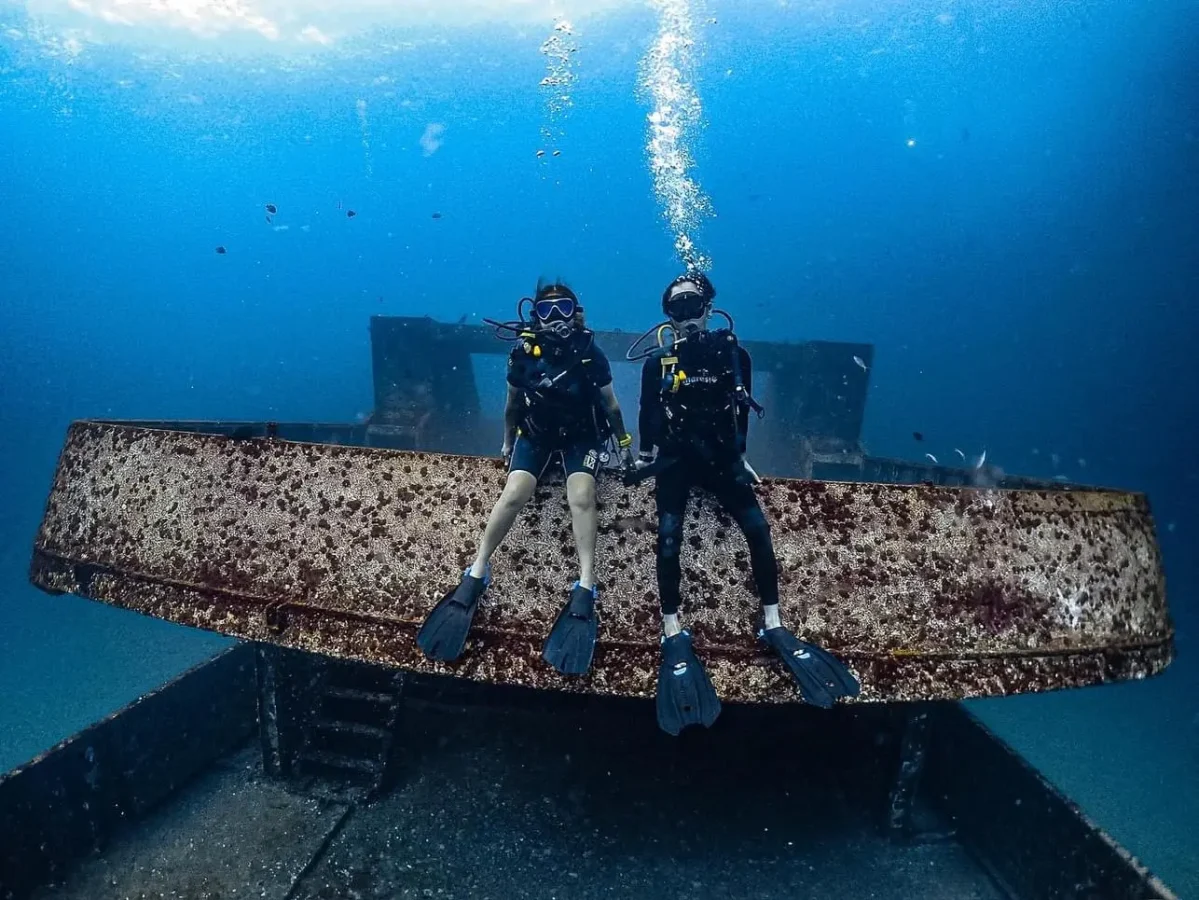


The Racha Islands offer much more than a single reef. Around Koh Racha Yai and Koh Racha Noi, divers can explore sandy bays, coral gardens, granite boulders, artificial reefs and wreck exteriors. Some locations reward a slow search for small marine life; others open onto deeper water where passing schools of fish draw your attention away from the reef.
This guide brings together the dive-site descriptions for both islands, helping you understand their different underwater landscapes. For prices, inclusions and the day’s schedule, visit our Racha Islands three-dive day trip from Phuket.
Your dive sites are chosen for the day. The route depends on weather, sea conditions, currents and the group’s certification and experience. These are possible dive locations, not a promise to visit every site. Depths below describe the terrain approximately; your actual dive profile is set by your scuba professional within your training and experience. Marine-life sightings and visibility vary.
Koh Racha Noi dive sites
Racha Noi’s granite coastline continues beneath the surface, creating a mixture of boulder formations, sandy slopes and coral patches. The sheltered bays offer a very different experience from the exposed southern tip. This variety is why conditions and diver experience matter more than choosing an island by name alone.
Banana Bay
Eastern Racha Noi · sandy shallows and coral gardens
Banana Bay curves along Racha Noi’s eastern side, with white sand and green hills above clear water. The shallow sandy areas begin at roughly 3–10 metres, before the seabed slopes towards coral formations around 25 metres and beyond. A dive can focus on the shallows or explore a deeper section when appropriate.
Hard corals, including patches of staghorn coral, provide shelter for butterflyfish, damselfish, pufferfish and redtooth triggerfish. Fusiliers move above the reef, while lizardfish can be harder to distinguish against the seabed. Taking your time around the coral heads is often more rewarding than covering a large distance.
The bay can offer sheltered diving when conditions suit. Its gentle-looking shoreline should not be taken as a guarantee of mild currents on every visit.
South Tip
Southern Racha Noi · exposed granite pinnacle · experienced divers, conditions permitting
South Tip is one of Racha Noi’s most dramatic underwater landscapes. Large granite boulders rise from deep water, with the shallower part of the formation around 12 metres and sections descending beyond 40 metres. Soft corals cover parts of the rock, and schools of fish can gather around the exposed formation.
This is a demanding site. Strong, changing currents, including downcurrents, can occur around the tip. It is not a routine first stop or a site to promise to newer divers; a visit depends on suitable conditions and the dive team’s assessment.
Manta rays are a possible highlight, alongside trevallies, tuna and barracuda, but none is guaranteed. Even without a large-animal encounter, the scale of the boulders and the surrounding blue water make this a distinctive location.

Marina Bay
Western Racha Noi · coral bommies and granite formations
Marina Bay combines a sandy slope with scattered coral bommies and submerged granite rocks. Within the bay, formations around 10–12 metres offer plenty to examine: hard corals, sea whips and small crevices where reef creatures shelter.
Cuttlefish, mantis shrimps and rays are among the animals to look for around the sand and coral heads. Beyond the bay, the larger formation known as Marita’s Rock offers a deeper boulder landscape, with parts around 24 metres and below. Sea fans, soft corals and schools of glassfish add texture to the rock faces.
The deeper terrain is a different proposition from a relaxed bay dive. The route should be chosen to suit the conditions and the divers, rather than treating every feature as part of one standard dive.
East Bay
Southeastern Racha Noi · shallow coral gardens and deeper rocky edges
East Bay is recognisable by the small island and connecting sandy ridge that becomes visible at low tide. Underwater, shallow coral gardens give way to a sandy seabed around 12 metres, with rocky areas continuing into deeper water.
Sea whips grow on parts of the rock, while cuttlefish, pipefish and flounders can blend into the quieter sandy areas. Rays may also pass through. A careful look at the seabed can reveal details that are easy to miss when swimming above the reef.
Currents can vary considerably here. Your dive team chooses the entry area and direction on the day, taking account of the shallows as well as the more exposed edges.
Camera Bay
Northwestern Racha Noi · shallow sand, coral patches and rocky margins
Camera Bay offers a varied underwater scene, with sandy areas beginning around 5 metres and a mix of hard and soft corals along the rocky edges. The inner bay can provide a sheltered place for a slower dive when conditions allow; outside it, the seabed falls into much deeper water.
Garden eels may appear above the sand, disappearing into their holes as divers approach. Look around the reef for nudibranchs, butterflyfish, parrotfish, octopus and cuttlefish. Small camouflaged animals make this a rewarding place to take your time with a camera.
A route beyond the bay may involve a drift along the coastline. That decision belongs to the dive team after assessing current and group experience.
Koh Racha Yai dive sites
Racha Yai is known for its sandy bays, reef fish and artificial reef features. Several sites have shallow sections suited to training or relaxed diving in appropriate conditions, while deeper reef edges and wreck exteriors offer further interest for suitably qualified divers.
Siam Bay
Northern Racha Yai · sandy slopes, coral patches and underwater statues
Siam Bay has rocky edges and a sandy centre, with a gentle slope towards roughly 20–25 metres. Hard coral patches create small gathering places for reef fish, making it a good location to slow down and observe what is happening around each coral head.
The bay is also associated with older underwater elephant statues and a temple-style gateway. These artificial features have become part of the underwater landscape, with fish and other marine life sheltering around them. For the distinction between the older statues and the newer sculptures, see our Racha Yai underwater museum and sculptures guide.
On the surrounding sand, watch for flounders, garden eels and rays. Moray eels, parrotfish, butterflyfish and triggerfish add interest around the reef and artificial structures. A statue visit depends on the day’s route and conditions.

Homerun Reef
Eastern Racha Yai · sloping reef, sand and possible drift diving
Homerun Reef runs along Racha Yai’s eastern side and is often associated with the final dive before heading back towards Chalong. The reef slopes towards a sandy seabed around 20–25 metres, with branching and other hard corals providing shelter for smaller animals.
Garden eels, pipefish and shrimps reward close observation, while snappers and goatfish move around the reef features. Trumpetfish and cornetfish can be particularly interesting to watch as they hunt near other fish.
Its reputation for relaxed diving comes with a qualification: currents can become moderate or strong. A drift may be possible when the conditions and group are suitable, but the current determines the direction and character of the dive.
Bungalow Bay
Western Racha Yai · North Wall, South Wall and shallow training areas
Bungalow Bay forms a broad horseshoe on the island’s west coast. Its northern and southern sides offer separate routes, with shallow sand in the middle and a mixture of coral and granite boulders towards the edges. Sheltered sections can suit newer divers when the day’s conditions are appropriate.
The central shallows begin at roughly 5–8 metres. Artificial concrete reef features give way to natural coral and boulders as you continue along either side. Parts of the northern reef reach around 22 metres, while the southern side also combines shallow reef with deeper rock formations.
Look for moray eels, pufferfish, batfish, lionfish and nudibranchs around the reef, and flounders or rays over the sand. Anemones and their resident clownfish provide colourful subjects, while an occasional turtle can make a memorable appearance.
The choice between the two sides depends on exposure, current and diver experience. There is plenty to enjoy without making the deepest part of the bay the objective.
Bays 1 and 2
Northeastern Racha Yai · sandy slopes, artificial reefs and wreck exteriors
Bays 1 and 2 combine shallow coral gardens with sandy slopes reaching towards roughly 25 metres. The shallows can be used for training in suitable conditions, while artificial reef structures and wrecks give returning divers different features to explore.
Reef cubes, metal structures and a submerged moped add unusual shapes to the underwater scenery. Batfish and barracuda may gather around the larger features, while gobies, garden eels and rays can be found over the sand. Morays and shrimps occupy quieter crevices.
Several wreck features lie beyond the shallow reef, with some exteriors in approximately the 14–24 metre range and other wrecks considerably deeper. Their condition changes over time, so your scuba professional will explain which are suitable to visit.
Seeing a wreck from outside and entering it are different activities. This day-trip guide describes exterior sightseeing; it does not suggest that wreck penetration is suitable for every certified diver. Stay with the agreed route and briefing.
Bays 3, 4 and 5
Eastern and southeastern Racha Yai · coral heads, reef slopes and deeper walls
Further along the east coast, Bays 3, 4 and 5 extend the choice of reef dives. Bay 3 has a sandy seabed scattered with coral heads, plus an artificial reef of concrete cubes around 20 metres. Batfish, lionfish, moray eels and shrimps can gather around the structures.
Continuing south brings you towards Lucy’s Reef, where hard corals and rock formations change the character of the scenery. Parrotfish, butterflyfish and angelfish provide colour, while small animals can be hidden among the coral and rubble.
Bays 4 and 5 have shallow starting areas with rock formations extending into deeper water. Around Waterfall Wall, the terrain drops towards 30 metres and beyond. These deeper edges call for suitable experience, and currents can change direction around the exposed features.
The dive team chooses the starting bay and route according to the current. A gentle-looking section inside a bay does not mean the water between bays will behave the same way.
Which Racha dive sites will suit you?
For newer certified divers, the appeal is usually a comfortable reef dive with manageable conditions, good time to settle in and plenty of marine life to observe. Sheltered parts of Banana Bay, Camera Bay, Bungalow Bay and Racha Yai’s east-coast bays can offer that experience when conditions permit.
More experienced divers may enjoy deeper reef edges, boulder landscapes and suitable wreck exteriors. South Tip requires particular care and remains a conditions-dependent possibility rather than a standard inclusion. Certification alone does not guarantee that every site is appropriate.
Tell us your certification level, approximate number of dives and when you last dived. If you have had a longer break, our scuba refresher options can help you plan a comfortable return. If you have never dived before, choose a Discover Scuba Diving experience instead of the certified-diver trip.
Want to develop your skills during your Phuket stay? Our PADI Nitrox Diver course combines enriched-air training with three Racha Islands dives. For qualified divers interested in deeper recreational profiles, the PADI Deep Diver course covers planning and techniques for diving to a maximum of 40 metres.
Ready for a day around the Racha Islands?
See the current price, inclusions, equipment options and itinerary on our Racha Islands three-dive day trip page, then message Thailand Divers on WhatsApp with your preferred date and diving experience.
 4.8/5
4.8/5 Read on Google